

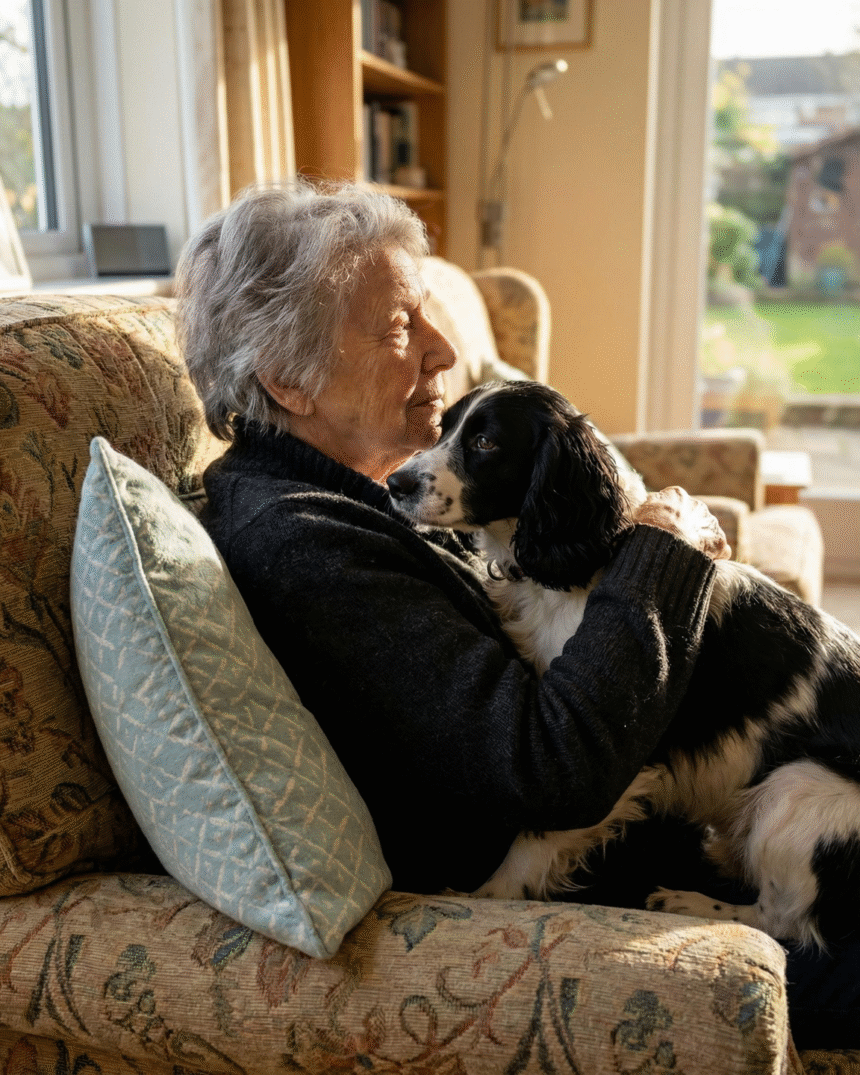
When my grandmother passed away, my relatives gathered for one purpose: to find her will. They filled her home with tense silence, each one hoping they would finally inherit something from the woman they had distanced themselves from for years. While they argued and waited impatiently for the lawyer, I focused on Berta—Grandma’s loyal old dog.
She had been Grandma’s companion for more than a decade, and seeing her confused and grieving broke my heart. When my family insisted they had no interest in keeping her, I took Berta home despite my apartment’s restrictions. Grandma had always said Berta had a gentle soul and that kindness shown to her would never go unnoticed.
At that moment, taking the dog felt like the only thing Grandma herself would have wanted.
Life settled into a quiet routine. I worked long shifts as a nurse and came home to Berta’s soft presence. She curled beside me when I was exhausted and followed me around as if trying to remind me I wasn’t alone.
My family remained convinced that Grandma had hidden her wealth somewhere, and when the lawyer revealed that no one would inherit anything, the disappointment was evident. Days later, my mother showed up at my door, insisting I was hiding something. I assured her that all Grandma had left me was Berta, but she stormed away unconvinced.
Later that night, as I comforted Berta, I noticed something unusual on her collar. Inside a small hidden compartment was a tiny key accompanied by an engraved address that led to a locker at the train station.
Following instinct, I drove straight to the station and located the locker. Inside was a folder labeled For Meredith.
My hands trembled as I opened it and found a letter in Grandma’s handwriting. She explained that she wanted her life’s earnings to go to someone who showed compassion without expecting anything in return. She believed that the one who chose to care for Berta—without knowing anything about the will—would be the most deserving heir.
I felt tears forming as I realized the trust she had placed in me. Along with the letter were the legal documents naming me as her sole beneficiary. Before I could gather myself, my family appeared, having followed me there.
But the lawyer who had managed the estate arrived as well, calmly reaffirming that Grandma’s wishes were clear and protected: the inheritance belonged to the person who chose kindness.
Driving home, I held the folder tightly while Berta rested her head on my shoulder. I felt an overwhelming mix of gratitude and responsibility. Grandma had always believed in integrity and generosity, and she wanted her legacy to support that spirit.
I decided that part of the inheritance would go toward the hospital where I worked—toward helping the people she always encouraged me to care for. As I looked at Berta, I whispered a quiet thank you to Grandma. Her final lesson wasn’t about wealth but about the quiet power of compassion, and I was determined to honor it every day.
After Mason moved in with his father, I tried to give him the space he’d asked for, believing it would help rebuild their bond after the divorce.
In the beginning, everything seemed bright—late-night breakfasts, funny text messages, photos of burnt waffles and movie nights. I told myself his happiness mattered more than my own longing to have him home every day. But little by little, those cheerful updates faded.
His messages became shorter, then rare, and finally silent. When his teachers reached out with concerns about missing assignments and a sudden withdrawal from class, I realized something deeper was happening. What I had mistaken for independence was actually a quiet unraveling.
I reached out gently, hoping to understand without causing conflict, but the answers I received were vague and dismissive.
Trusting my instincts, I drove to his school one rainy afternoon, simply needing to see him with my own eyes. Mason walked toward the car alone, shoulders slumped, eyes tired in a way no teenager’s should be. When he finally spoke, the truth came slowly: his father had been struggling with unexpected hardships, and Mason had been carrying far more than any fourteen-year-old should.
Empty cupboards, flickering lights, late nights alone—he had stayed silent to protect us both. Hearing how much he had tried to manage on his own broke something inside me. It wasn’t defiance or carelessness that had caused the change—it was survival.
That evening, I brought him home without hesitation.
There were no arguments, only relief. The first thing he did was sleep—deeply, peacefully—finally safe enough to rest. In the days that followed, I rebuilt our routine with gentleness: warm meals, soft spaces, and room to speak or stay quiet.
We began therapy at his pace. I left encouraging notes on his door, small reminders that he was seen and valued. Slowly, laughter returned to our home.
Mason started staying after school for robotics club, rebuilt old hobbies piece by piece, and even brought home a wobbly popsicle-stick bridge that collapsed in his hands. Instead of frustration, he laughed—a sound I had missed more than I realized. His teachers noticed the change too, naming him “Most Resilient Student” at the end-of-year ceremony.
When he looked for me in the crowd and smiled, I knew we had both come a long way.
Today, Mason lives with me full-time, and our home feels alive again. Music plays too loudly from his room, notebooks pile up on his desk, and hopeful notes he writes to himself decorate his walls. He teases me about my outdated phone and negotiates for brightly colored hair dye.
And when he asks for help—whether with homework or life—I stop and show up, every time. I’ve learned that love is not passive; it is presence, consistency, and choosing to step in when silence becomes a signal. Mason didn’t need distance—he needed safety, support, and a place to breathe.
And I will always be grateful for the moment I listened closely enough to hear what he wasn’t saying.
In recent months, the Brady family has been at the center of warm public attention as fans notice how much Tom Brady’s children are growing and stepping confidently into young adulthood. The latest wave of admiration emerged when NBA star Karl-Anthony Towns shared photos of a relaxed basketball day with Tom Brady and his eldest son, Jack. The post quickly drew interest not because of celebrity glamour, but because of the natural, easygoing bond on display.
Jack, now 18, appeared poised and comfortable as he joined the two athletes on the court, showing an enthusiasm for the game that felt both familiar and promising. Fans, many of whom have watched him grow for years through occasional family photos, remarked on how much he resembles his parents and how mature he has become.
The casual afternoon of basketball, captured through candid snapshots, showed a family moment rooted in camaraderie and shared passion for sports. One image featured Jack taking a jump toward the hoop while Karl-Anthony smiled at the camera, perfectly capturing the lighthearted energy of the day.
In another, Tom Brady stood to the side with a relaxed posture, watching proudly as his son and friend enjoyed the game. Social media users responded enthusiastically, noting how naturally Jack blended into the scene and how he seemed to carry himself with confidence. Rather than focusing on any single trait, many commenters simply celebrated seeing him active, engaged, and clearly enjoying himself.
It was a reminder of how effortlessly sports can bring people together across generations.
This moment of admiration matched the public’s response earlier in the year when Tom shared photos from a family trip to Japan with his younger children, Benjamin and Vivian. The travel album offered a rich collection of scenes: the trio dressed in traditional robes, exploring vibrant markets, interacting with animals, and taking in the sweeping beauty of Tokyo’s skyline. Each frame captured something uniquely warm — a shared laugh, a thoughtful pause, or a moment of discovery.
Among the images, many viewers connected with the picture of Vivian gently holding a small hedgehog while her father looked on with amusement, a scene that highlighted her curiosity and her growing sense of individuality. Another photo, showing Tom with an arm around her as they walked through a quiet street, struck an especially tender chord with fans who admired the closeness of their bond.
Across both sets of photos — from the basketball court to the streets of Japan — one theme connected every reaction: the joy people feel watching children grow into themselves. Fans expressed a warm sense of familiarity, as though they had witnessed the Brady siblings’ evolution from afar and were now cheering them on as they navigate new stages of life.
Jack’s steady confidence at 18 and Vivian’s grace at 13 reflect more than physical growth; they reveal a family grounded in shared experiences, traditions, and genuine affection. As Tom Brady continues to share glimpses of these moments, the public response remains consistent: admiration not for fame, but for the simple, universal beauty of a family growing, exploring, and celebrating life together.
When my grandmother, Grace, passed away, I expected her will to reflect the quiet but deep relationship we had built. She raised me from the time I was six, stepping in when my mother and sister were too consumed with their own lives to notice the little boy slipping through the cracks.
With her, I learned what it meant to be cared for: handwritten lunch notes, cheering from the front row at every school event, and soft encouragement even on the days I didn’t believe in myself. So when we gathered after her funeral to hear the will, I believed her presence would linger in whatever she left behind. Instead, my mother inherited the house, my sister received the car, and I was given only a single framed photo of the two of us at the zoo—one I had seen on her hallway wall for years.
At first, the simplicity of her gift left me shaken.
While my family celebrated their new possessions, I slipped away quietly, photo in hand, trying to understand why she had entrusted me with so little. Back home, I removed the picture from its worn frame to place it in a new one a coworker had gifted me. As I lifted the cardboard backing, something unexpected appeared: a small sealed envelope taped behind the photo.
Inside were stock certificates, bank documents, and a safety deposit key, along with a short note in her familiar handwriting: “Real treasure isn’t loud. Love, Grandma G.” It took me hours to absorb what she had done. She hadn’t overlooked me—she had protected me.
She had trusted me to use what she left wisely and quietly, without attracting the kind of conflict she knew could arise in my family.
In the safety deposit box, I discovered far more than financial assets. She had left me deeds to several rental properties, long-term investments, and—most surprising of all—ownership of the land beneath the home she had willed to my mother. Suddenly, her choices made sense.
She wasn’t withholding anything from me. She was ensuring stability, privacy, and control, in a way that shielded me from resentment. With those resources, I purchased the family home back from my mother, not to live in, but to transform into something that reflected the generosity she taught me.
Over time, the space became “Grace’s Corner,” a warm community hub offering meals, books, and rest for anyone who needed it. Volunteers joined in, and the old house slowly filled with the same welcoming spirit my grandmother had once filled it with.
Months later, even my sister found her way back, asking for support during a difficult moment in her life. Instead of turning her away, I offered her a place to participate and contribute, just as our grandmother would have done.
Standing inside the home that now honored her memory, I realized her final lesson was hidden in that framed zoo photo: the most valuable inheritance isn’t a house or a car—it’s the ability to create a place where others feel safe, seen, and encouraged. What she left me was not just wealth but purpose, and that mission continues to guide me every day.
Many people enjoy personality tests because they offer a lighthearted way to explore the parts of ourselves we don’t always notice. This visual test is no different.
Instead of relying on logic or long questionnaires, it invites you to trust your instinctive reaction. When you look at five silhouettes and choose the one you find the most appealing, you’re not just selecting an image—you’re revealing something about the qualities you naturally value. These choices aren’t scientific, but they do open a window into how you view the world, what you gravitate toward, and the quiet strengths that shape your personality.
Those who feel drawn to the first silhouette often appreciate steadiness and inner calm.
People with this preference tend to be grounded, dependable, and gentle in their approach to life. They offer reassurance simply by being present, and their strength lies in consistency rather than intensity. If the second silhouette caught your eye, you may be someone who values warmth, joy, and connection.
Individuals with this preference often bring light into a room without trying—they encourage laughter, kindness, and openness. Their genuine nature draws others in, and they form relationships built on trust and sincerity. If your choice was the third silhouette, you may lean toward compassion and harmony.
You likely seek balance in your interactions and avoid unnecessary conflict. Those with this inclination often serve as quiet anchors for the people around them.
Choosing the fourth silhouette suggests an appreciation for wisdom, fairness, and thoughtful action. People who gravitate toward this figure tend to be composed and reflective, offering guidance without judgment.
They balance strength with flexibility and inspire confidence through their clarity and calm. On the other hand, selecting the fifth silhouette may indicate a bold, goal-driven personality. Individuals with this preference often embrace new challenges with confidence and resilience.
They are ambitious yet deeply loyal, with a strong sense of integrity that guides their choices. While the surface traits may differ, each silhouette represents a unique style of thinking, feeling, and relating to others—reminding us that there is no single way to be strong, kind, or admirable.
Ultimately, this visual test serves as a gentle reminder that the qualities we perceive as “beautiful” often mirror something meaningful within ourselves. Whether you identified most with steadiness, warmth, empathy, wisdom, or determination, your instinctive choice reflects what resonates with your inner nature.
It highlights the traits you notice, value, or aspire to cultivate. And perhaps the greatest insight of all is that beauty is not simply something we see—it is shaped by who we are, what we cherish, and the lens through which we experience the world.