
Not yet. Instead, I started keeping notes. Every time I heard a rumor, every time I spotted something unusual, I wrote it down in a notebook under my mattress.
Dates, times, details. I was only thirteen, but I felt like I had no choice but to become the detective no one else wanted to be. Weeks passed.
One morning, while cleaning the garage, I found something tucked behind a stack of paint cans: a shoebox filled with Polaroids. Most were just ordinary pictures of family barbecues, birthdays, trips to the lake. But near the bottom, there was one that stopped me cold.
It was him. My cousin. Standing next to that same pickup truck the neighbors mentioned.
The man in the photo had his arm slung around him, too tight, like a grip instead of a hug. And the look on my cousin’s face wasn’t happy—it was scared. I showed the photo to Aunt Marla.
She snapped. Told me to stop snooping. Said I was only making things harder for everyone.
But when she turned away, I noticed her wipe her eyes with the back of her sleeve. That night, I couldn’t sleep. I kept thinking about the truck.
I hadn’t seen one like it in weeks, but the image burned into my brain. So I made a plan. Every day after school, I biked around town.
I circled parking lots, drove past the gas station, even hung around near the old diner. And then, one Friday, I spotted it. The same truck.
Same dented fender. Same peeling paint. It was parked behind the hardware store.
My chest tightened. I scribbled down the license plate on my hand with a marker and raced home. When I showed it to Aunt Marla, I thought she’d finally be relieved.
Thought she’d call the police and tell them I’d found something real. But instead, she sat me down at the kitchen table and whispered, “You can’t tell anyone about this.”
I didn’t understand. Why not?
That’s when she finally admitted the truth. She knew the man. My cousin hated him.
Said he gave him the creeps. And then she said something that made my skin crawl. The night before he disappeared, she’d heard them arguing in the yard.
She thought it was just another shouting match, so she went back to bed. By morning, he was gone. She didn’t call the police again because she was afraid.
Afraid they’d blame her. Afraid they’d think she let it happen. I sat there, staring at her, my chest aching.
All this time, she’d known pieces of the truth. But she hadn’t done anything. I wanted to scream, but instead I grabbed the notebook from under my mattress and slammed it on the table.
Told her if she wouldn’t fight for him, I would. The next day, I went to the police myself. At first, they brushed me off.
Said I was “just a kid with wild stories.” But when I pulled out the photo of the man with my cousin, and the license plate number, something shifted. They asked me to wait outside while they made some calls. Two weeks later, there was a knock on our door.
They’d found the truck. It was abandoned in a county three hours away, near a row of storage units. Inside one of the units, they found more Polaroids.
Kids from different neighborhoods. Kids who’d all been “runaways.”
And then, buried under piles of old blankets and junk, they found my cousin’s jacket. He wasn’t there.
But it was proof. Proof he hadn’t just “run away.” Proof someone had taken him. The police started a bigger search.
This time, they didn’t stop after a week. Flyers went up again. Dogs combed the woods.
News crews came. People who had once whispered and looked away now lined up to help. And for the first time since that photo, I felt like maybe—just maybe—someone was actually listening.
Months passed. Every day felt like walking through fog. School didn’t matter.
Friends didn’t matter. All I could think about was whether he was still out there. Whether he was waiting for me to keep looking.
Then one evening, almost a year later, the phone rang. They’d found him. Alive.
He was thinner, older somehow, like the year had aged him twice as fast. But when he stepped out and saw me standing there, he smiled with that same crooked grin from the photo. We didn’t say anything at first.
We just hugged. It didn’t erase what happened. It didn’t fix the months of silence or the nights of fear.
But it was enough. Enough to know I hadn’t been wrong. Enough to know fighting for him mattered.
The man was arrested. He’ll never hurt another kid again. And Aunt Marla—she broke down and apologized.
Said she should’ve spoken sooner. Said her fear nearly cost her everything. Life didn’t go back to normal.
Not really. But in some ways, it became something stronger. We learned to talk about things instead of hiding them.
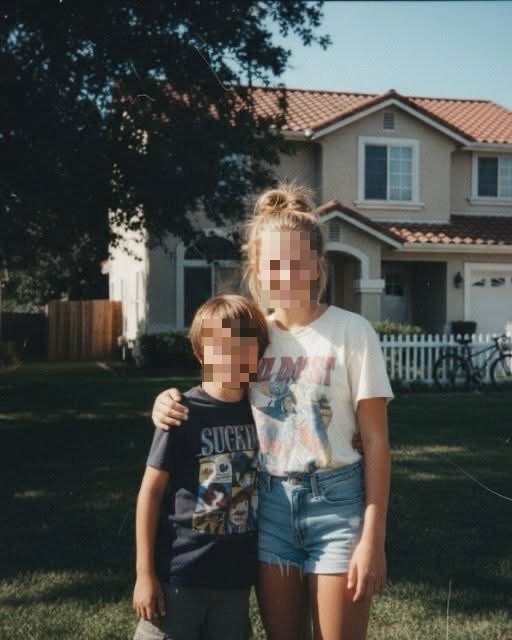
We learned that silence can be as dangerous as the monsters outside. And most of all, we learned that even when everyone else looks away, one person refusing to give up can change everything. Sometimes I still stare at that last photo we took together.
It used to feel like an ending. Now, it feels like a reminder. A reminder that people aren’t really gone until you stop fighting for them.
And maybe that’s the lesson I’d want anyone to take from this. Don’t ignore what feels wrong. Don’t let fear keep you silent.
Because sometimes, the difference between being lost and being found is just one voice refusing to give up. If you read this far, share it. Maybe it’ll remind someone else to keep looking, keep asking, keep believing.
And if you felt something, hit like—it tells me this story mattered to you.