
Meanwhile, Fiddler on the Roof brought audiences back to the musical genre, charming the crowd with its sweeping score and heartwarming story.
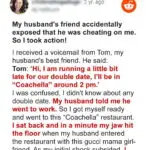
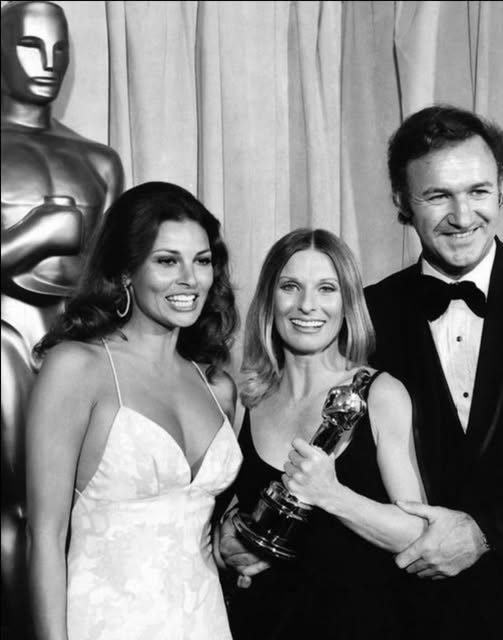
The Last Picture Show, Peter Bogdanovich’s coming-of-age masterpiece, captivated audiences and earned eight Academy Award nominations. With its evocative black-and-white cinematography, the film’s nostalgic portrayal of small-town life stood out. Cloris Leachman and Ben Johnson delivered unforgettable performances, each taking home the Oscar for Best Supporting Actress and Actor.
No hotpants in sight
The 1972 Academy Awards marked a dazzling return to the glitz and glamour of Hollywood’s golden era.
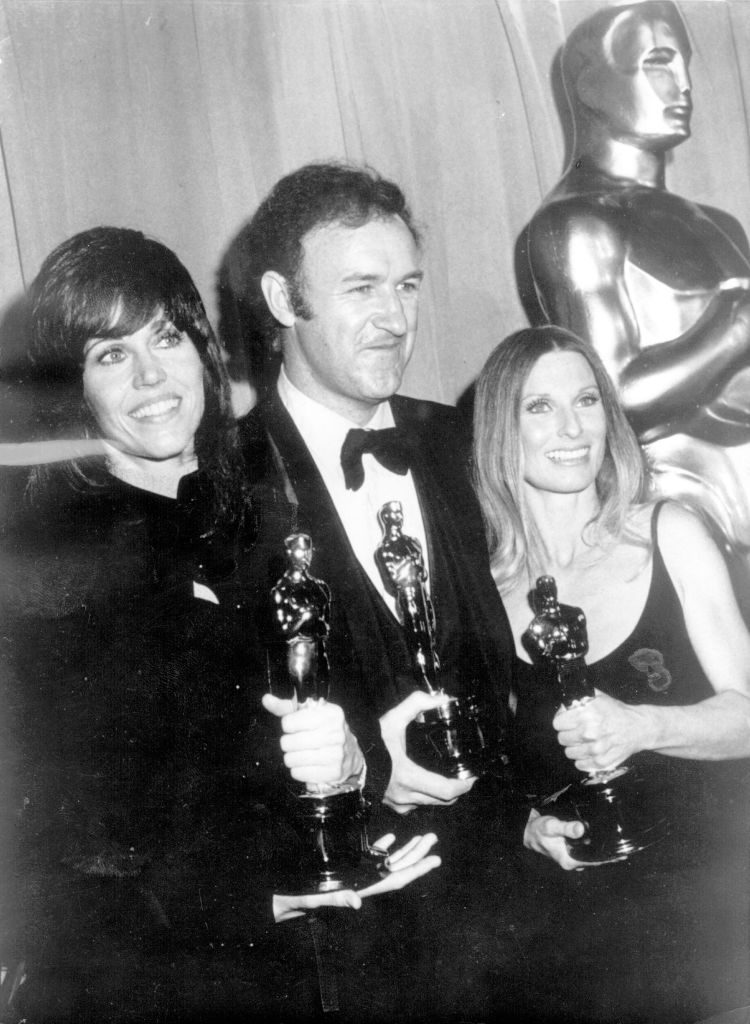
Gone were the feathers, fringe, and hippie headbands that had dominated recent ceremonies. This year’s gala showcased a stunning array of vintage elegance, with stars adorned in flowing chiffons and luxurious brocades, accentuated by diamonds and furs.
As some reporters noted, there wasn’t a hotpants outfit in sight, although Jane Fonda made a bold statement in one of the few pant suits on the red carpet.
One reporter also noted that many of the ladies showcased “plenty of cleavage,” adding to the evening’s glamorous atmosphere.
Protests
As always, the area outside the Los Angeles Music Center was bustling with fans eager to catch a glimpse of the star-studded parade making its way to the awards ceremony.
However, the excitement was tinged with tension, as protests erupted nearby — a common occurrence in those days.
Demonstrators, reported to be quite vocal, were held back by a cordon of police officers.
That year, the focus of the protests was Clint Eastwood’s Dirty Harry, which, despite not being nominated for any awards, faced criticism for allegedly glorifying police violence. One particularly striking sign read, “Dirty Harry is a Rotten Egg.
Shirtless & covered in chainsMusic played a significant role in making the 1972 Oscars unforgettable.
Isaac Hayes made history as the first African American to win an Oscar for Best Original Song for his hit “Theme from Shaft,” bringing soul music to the Oscars in a way that had never been done before.
His electrifying performance on stage was one of the highlights of that April night. The icon, shirtless and draped in chains, commanded the stage as he played the keyboard, surrounded by a whirlwind of dancers.
The show reached its peak when Hayes disappeared beneath the stage in a cloud of smoke, leaving the audience in awe.
It was a moment that truly defined Oscar magic!
Betty Grable’s farewell
One of the evening’s standout moments came when the legendary actress Betty Grable graced the gala, making one of her final public appearances.
Betty Grable was — and remains — one of Hollywood’s giants. Her iconic bathing-suit poster, created in 1943, catapulted her to fame as the top pin-up girl of World War II. But Grable was more than just a pretty face; she was a highly successful actress, with her 42 films during the 1930s and 1940s grossing over $100 million.
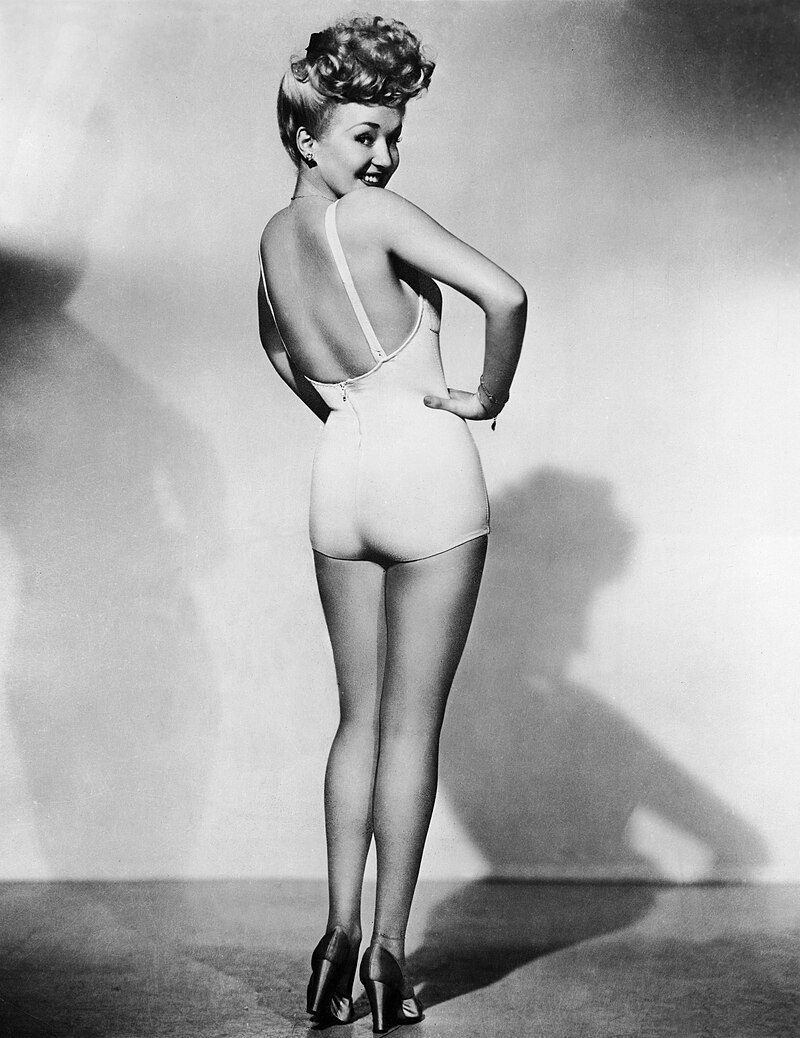
In the mid-1940s, she was the highest-paid woman in America, famously insuring her legs for for $1 million. Reflecting on her incredible journey in film, Grable once said, ”I became a star for two reasons, and I’m standing on them.”
Betty Grable arrived in a striking turquoise gown, beautifully accented with silver spangles and featuring an elegant décolleté.
Sadly, the 1972 Oscars marked one of her final public appearances, a bittersweet moment for the fans who adored her.
Tragically, she passed away just a year later from lung cancer at the age of 56.
A frail, white-haired pioneer
Among the star-studded ensemble at the 44th Academy Awards, one figure stood out above the rest. At the culmination of the nearly three-hour-long awards presentation, a frail, white-haired film pioneer made a surprise appearance. It was none other than Charlie Chaplin, who had been ousted from Hollywood and the U.S.
two decades earlier after being accused of communist sympathies.
The moment was incredibly emotional as Chaplin was honored for his contributions to cinema. The 82-year-old actor stepped onto the stage with his trademark derby cane, earning thunderous applause from the 2,900 celebrities in attendance.
In fact, the standing ovation lasted for 12 minutes – the longest in Academy Awards history.
For the millions watching at home, witnessing this cinematic giant in front of them felt almost surreal. But the most poignant moment belonged to Chaplin himself as he was given the special award by the Academy of Motion Picture.
”Oh, thank you so much.
This is an emotional moment for me. And words are so feeble and futile. Thank you for the honor of inviting me here.
You are wonderful, sweet people,” the English comic actor said.
Whether through the lens of the camera or the echo of applause, the 1972 Academy Awards will forever hold a special place in cinematic history!This original Oscars photo from 1972 is not edited.