

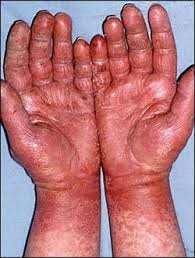
Patches are commonly located on the scalp, elbows, knees, and lower back. This condition may be itchy or asymptomatic.
Actinic keratosis
This condition causes a thick, scaly, or crusty skin patch.
It’s typically less than 2 cm or about the size of a pencil eraser. It often appears on parts of the body that receive a lot of sun exposure, such as the hands, arms, face, scalp, and neck. The skin patch is usually pink in color but can have a brown, tan, or gray base.
This patch may appear the same color as the surrounding skin in people with darker skin.
Hives
This causes itchy, raised welts that occur after exposure to an allergen. Welts may be warm and mildly painful to the touch.
Hives on darker skin can appear raised or inflamed and might be slightly darker or lighter than your natural skin color. On lighter skin, hives usually appear red. They can be small, round, ring-shaped, or randomly shaped.
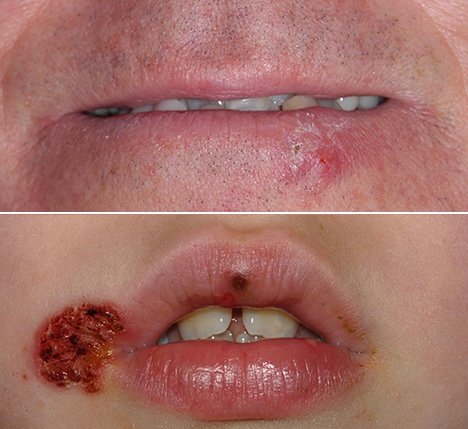
Carbuncle
This causes a red, painful, and irritated lump under your skin. It may be accompanied by fever, body aches, and fatigue. It can also cause skin crustiness or oozing.
It may appear more violet on darker skin.
Rosacea
This chronic skin disease goes through cycles of fading and relapse. Relapses may be triggered by spicy foods, alcoholic beverages, sunlight, stress, and the intestinal bacteria Helicobacter pylori.
There are four subtypes of rosacea encompassing a wide variety of symptoms. Common symptoms include facial flushing, raised red bumps, skin dryness, and skin sensitivity. People with darker skin tones may notice brown discoloration or dry and swollen patches of dark skin.
Skin: A Window into Internal Health
Even beyond acne, the skin can be a window into the health of a person’s internal organs. For the sake of beauty, ignoring skin problems can make them worse. Numerous skin signals exist as red flags for underlying severe disorders.
Disclaimer: We are NOT here to provide you medical advice, so please keep that in mind. Everything you read in our publications is meant for educational purposes only. Seek the advice of trained medical specialists, please.