

I still drove to the hospital—but not to hand over my credit card.
I went because a child was hurt, and Owen, whatever his parents had done, was innocent.
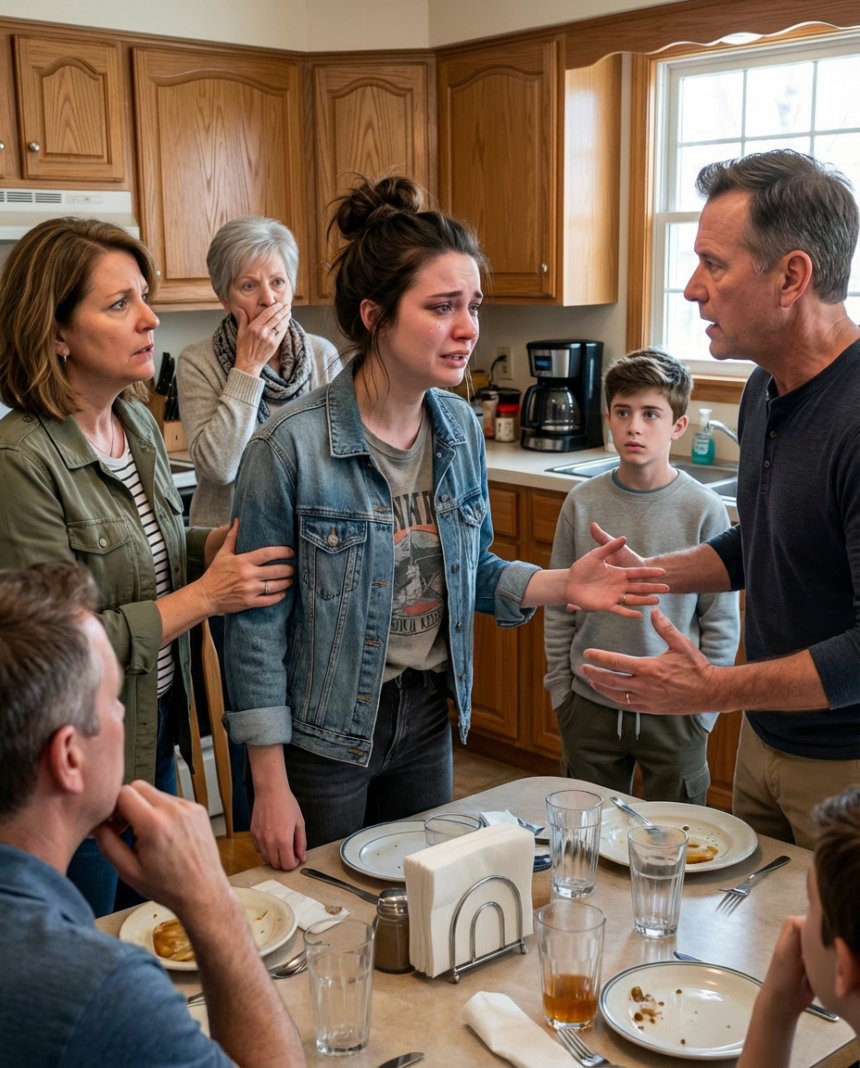
When I arrived, Tamsin was crying dramatically near admissions, Derek paced in circles, and my father stood stiff, jaw tight. My mother rushed toward me like I was an ATM finally back online.
Tamsin grabbed my wrist. “Just pay it, Elara.
We’ll figure it out later.”
I looked at her hand, then at all of them, and gently pulled free.
“No,” I said. “But I did bring something better than what you deserve.”
For the first time in years, they all fell silent.
What I brought wasn’t a checkbook. It was Nadine’s husband, Curtis, an attorney specializing in insurance disputes and medical billing.
On the drive, I had called Nadine in a panic, and within ten minutes Curtis joined the call. He asked two questions Derek should have asked weeks earlier: exactly when the insurance lapsed, and whether the school had filed an incident report.
It turned out Derek had switched jobs six weeks before. The new coverage hadn’t started yet, but the old plan might still qualify for COBRA continuation if they acted immediately.
Curtis also explained that the hospital’s financial assistance office could not legally refuse emergency stabilization for a child just because the family couldn’t pay upfront. Surgery could proceed while payment sources were sorted. In other words, the twelve thousand they were demanding in fear and confusion wasn’t the final truth.
It was pressure.
When Curtis arrived with a leather folder and introduced himself, the emotional atmosphere shifted instantly. The admissions supervisor softened. The billing coordinator appeared.
Forms surfaced. Deadlines were explained. Numbers were given.
Derek stopped pacing and started sweating for a different reason: he realized this situation might be resolved without draining someone else’s account.
My parents, however, were furious.
My mother pulled me aside near the vending machines. “Why would you embarrass us like this?”
I stared at her. “Embarrass you?
Owen is getting treated. That should matter.”
“The point,” she whispered sharply, “is that family steps up.”
“I did step up,” I said. “I just didn’t surrender.”
Her face hardened the way it had since I was a teenager.
My father joined her, his voice low and warning. “You’ve become cold.”
“No,” I said. “I finally became clear.”
Hours later, Owen was in surgery.
Curtis had secured the hospital’s cooperation, Derek was on the phone trying to activate COBRA retroactively, and Tamsin sat near a wall outlet, mascara streaked beneath her eyes. For the first time in my life, she looked smaller than the version of herself she always projected.
“You think I wanted this?”
I leaned against the wall across from her. “Wanted what?”
She let out a bitter laugh.
“Being the favorite. Being the one everyone rescues. It sounds great until you realize no one expects you to stand on your own.
They just keep handing you another cushion and calling it love.”
I should have felt satisfied. Instead, I just felt tired.
“You still accepted it,” I said quietly.
Her eyes filled. “I know.”
That could have been the start of something honest—but Derek interrupted, waving his phone.
“COBRA only covers part of it. There’s still a deductible, and the orthopedic specialist is out of network. We’re going to owe thousands.” He looked straight at me.
“If you were any kind of aunt, you’d cover the gap.”
There it was again. Not gratitude. Not humility.
Entitlement dressed up as duty.
Before I could respond, Curtis stepped forward. “Do not ask her again tonight. If you need payment plans, hardship applications, or appeals, I’ll help you file them.
But no one here is entitled to her money.”
Derek opened his mouth, then closed it.
For a moment, I felt something unexpected: relief. Not because the crisis was over—it wasn’t—but because someone had finally said aloud what I had spent years trying to explain. Helping is not the same as being used.
Mercy is not obligation. And love without respect is just control with a softer face.
By morning, Owen was stable. The surgery had gone well.
I stopped by recovery, kissed his forehead, and left before another argument could start.
I thought that would be the end.
I was wrong.
I lived in a modest brick building above a hardware store in German Village, the kind of place my family used to mock for being “small for a woman your age.” What they never understood was that every inch of it was mine. The rent was always paid. The furniture was debt-free.
The quiet was earned.
When I opened the door and saw her clutching her purse against her coat, I knew she hadn’t come to apologize.
She stepped inside, glanced around once, and said, “Your father doesn’t know I’m here.”
That usually meant she intended to deny whatever came next.
She sat at my kitchen table and got straight to the point. The surgery, therapy, deductible, and missed work had created more expenses than Derek and Tamsin could handle. They were behind on their mortgage.
My parents had already maxed out a credit card. Then she slid an envelope across the table.
Inside was a typed agreement. They wanted a “temporary family loan” of thirty thousand dollars from me.
Not a request.
A contract.
I exhaled slowly and read it through. Payments would begin in six months. No collateral.
No penalties for missed payments. A warm sentence at the bottom said the arrangement would “reflect my commitment to family well-being.”
I set it down carefully. “You had this prepared?”
“We were trying to do it properly,” she said, as if that made it acceptable.
“You were trying to formalize dependence.”
Her eyes flashed.
“That is your nephew’s home.”
“No,” I said. “That is Derek and Tamsin’s responsibility.”
She leaned forward. “Do you really want to be the kind of woman who watches her own family lose everything?”
That line might have broken me a year earlier.
But too much had changed. Too many holidays where I paid and smiled. Too many emergencies that landed on me after they ignored my boundaries.
Too many years of being told I mattered least—until my money mattered most.
Inside were copies of every loan, transfer, and “temporary favor” I had covered over the last nine years. Car repairs. Rent support.
School deposits. Utility shutoff payments. Even the honeymoon deposit my parents had promised to repay in three months.
I started documenting everything after the third time someone claimed I was “imagining” how much I had given.
I placed the folder in front of her.
“If this family believes in repayment now,” I said, “we can begin with the sixty-four thousand, eight hundred and thirteen dollars already owed to me.”
She looked as if I had struck her.
“That’s cruel.”
“No. It’s accurate.”
She stood so abruptly her chair scraped back. “You kept score?”
“Yes,” I said.
“Because none of you did.”
For the first time in my life, my mother had nothing prepared. No speech about guilt. No lecture about blood ties.
No dramatic declaration about sacrifice. She just stared at the numbers, the dates, her own signature on old checks and notes proving she had known all along.
A week later, the fallout came quickly. My father called me ungrateful.
Derek sent a message saying I had destroyed the family. Tamsin, surprisingly, said nothing for three days. Then she texted: I saw the folder.
I didn’t know it was that much. I’m sorry.
The real ending came six months later. Derek sold his truck.
Tamsin returned to full-time work at a physical therapy office. They set up a formal payment plan with the hospital and refinanced their mortgage through a credit union counselor Curtis recommended. My parents stopped treating their retirement fund like a rescue raft for grown adults.
And me? I stopped attending any gathering where love was measured by what I could cover.
Tamsin and I aren’t close, but we are honest with each other now. Sometimes that’s better.
No one ever repaid the full sixty-four thousand.
They probably never will. But they learned something more valuable than fear. They learned I was no longer the easiest person to sacrifice.
And once that truth settled in, the entire family reshaped itself around it.