

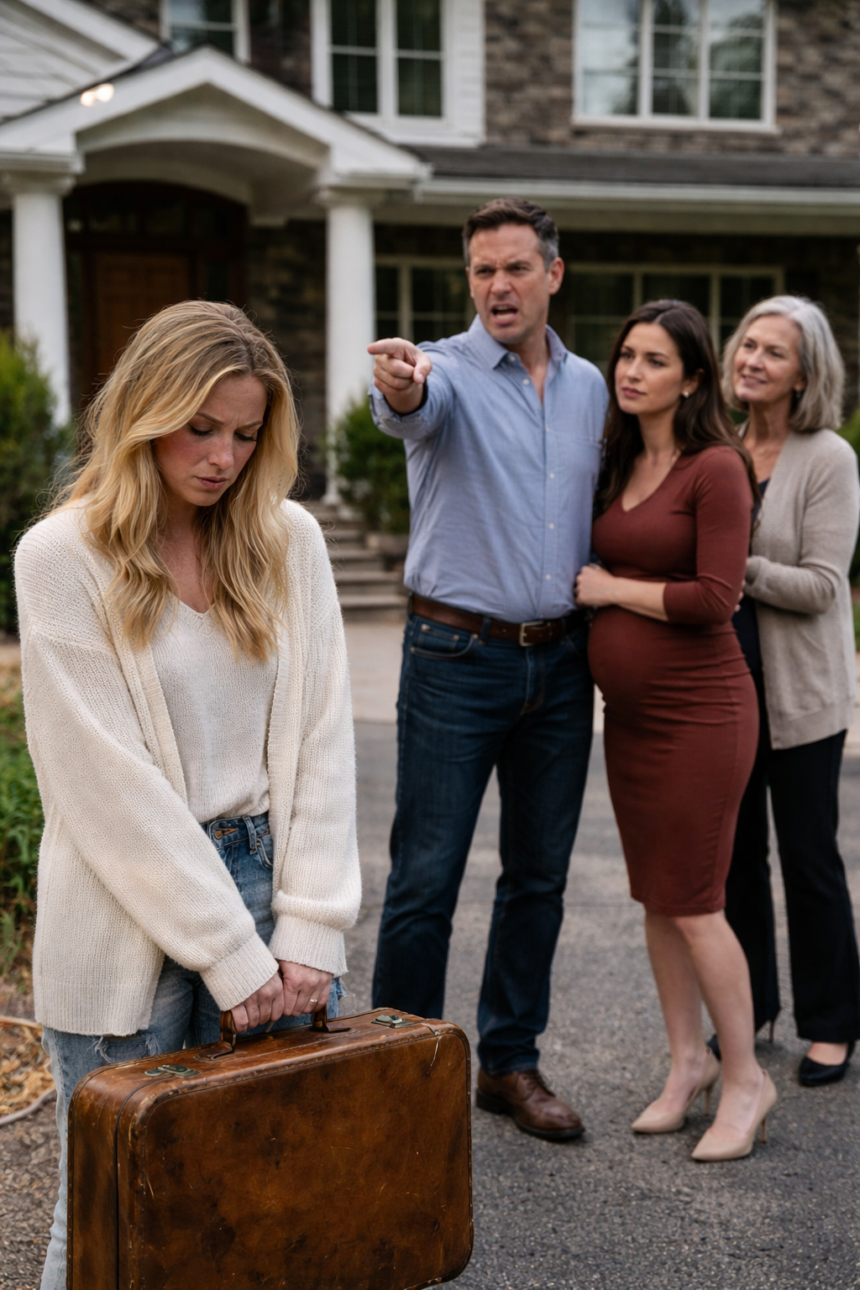
If you give birth to a son, you remain part of this household. If the child is a daughter, then it is best for everyone that you move on.”
The room went silent, and in that silence, something inside me shifted permanently. I looked at Greg, waiting for him to object, to defend me, to say that our marriage was not conditional.
He said nothing. His silence was not neutral. It was a choice.
That night, I did not sleep. I stood by the bedroom window, one hand resting on my stomach, realizing that even if I were carrying the son they demanded, I no longer wanted to belong to a family that reduced human worth to tradition and control. I understood then that staying would mean teaching my child to accept the same cruelty as normal.
The next morning, I drove to the county office and requested the paperwork for legal separation. Each form felt heavy, but each signature felt honest. When I walked back outside, the air felt sharper, clearer, as if the world had shifted slightly to accommodate my decision.
I left that house with a suitcase, prenatal records, and a quiet determination that surprised even me. I moved to Santa Cruz, where the ocean air carried a sense of renewal. Through persistence and the kindness of strangers, I secured a position as a front desk coordinator at a small family clinic.
The work was steady and unglamorous, but the people treated me with dignity. As my pregnancy progressed, I began to rediscover pieces of myself that had been buried under years of self doubt. Back in the Lawson household, Greg’s new partner arrived with ease and confidence.
Her name was Vanessa Hill, and she fit seamlessly into the image the family preferred. She spoke about luxury without apology and wore her ambition openly. Mrs.
Lawson adored her. At gatherings, I was spoken of as if I were already part of the past. I heard these things through mutual acquaintances and felt no urge to respond.
My life had grown quieter, but it had also grown lighter. When my daughter was born, it was early morning, and the hospital room was filled with soft light. She was small, alert, and impossibly calm.
Holding her, I felt a sense of completion that no marriage had ever given me. I named her Sophie, not for tradition, but because the name felt gentle and strong all at once. Motherhood was exhausting and beautiful in equal measure.
The nights were long, but my heart felt full. Then, months later, news from my former life reached me unexpectedly. Vanessa had given birth as well, and the Lawson family had celebrated with extravagant pride.
Their heir had arrived, or so they believed. The truth emerged slowly and quietly. Hospital records raised questions.
Genetic tests confirmed what whispers had suggested. The child was not Greg’s. The family that had spoken so confidently about lineage and legacy fell into chaos.
When I learned what had happened, I felt no satisfaction. Only clarity. One evening, as Sophie slept against my chest, I realized something important.
I had not lost anything of value when I walked away. I had gained peace, autonomy, and the freedom to raise my child without fear or conditions. As I watched the sun set beyond the horizon, I whispered a promise to my daughter.
“I cannot give you a perfect world,” I said softly, “but I will give you a life where love is not earned by meeting expectations, and where your worth will never be questioned.”
For the first time in years, I smiled without sadness. The future felt open, and it belonged entirely to us.