
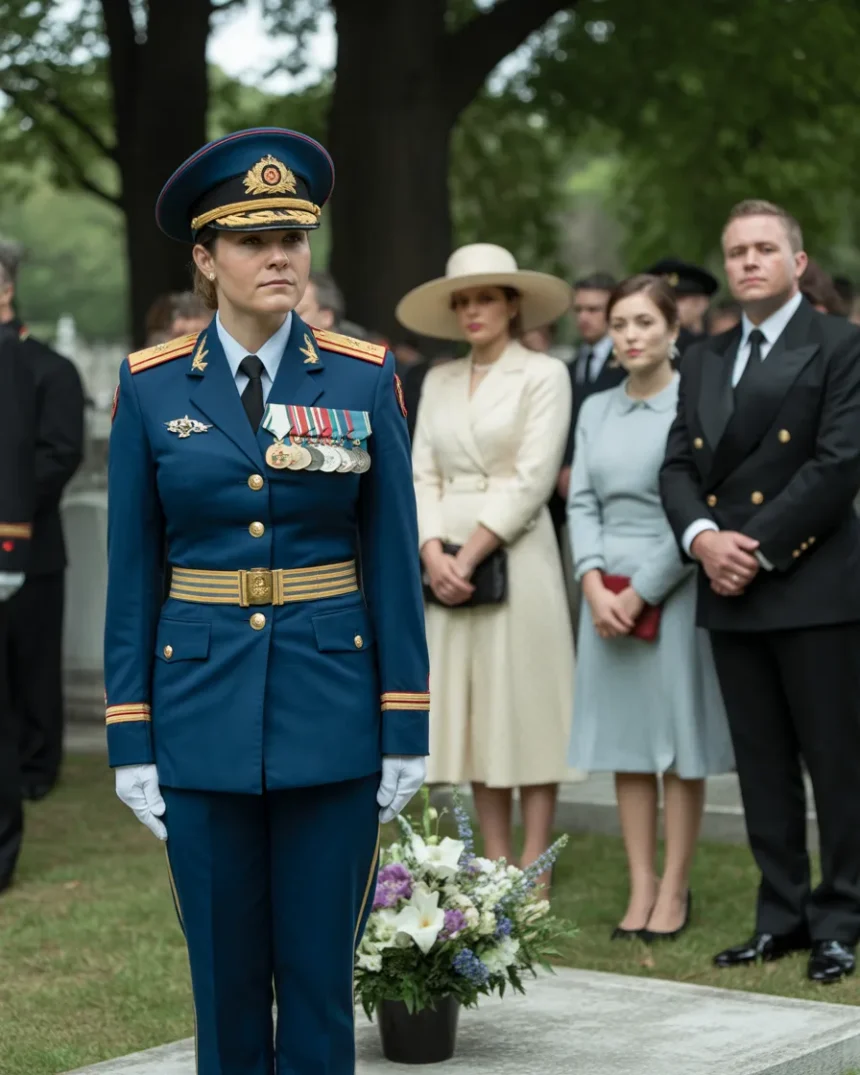
The General They Never Knew
My name is Cassandra Sharp. I’m forty-two years old, and for the last three years, I’ve learned that family loyalty doesn’t always flow both ways, especially when they think you’re just a glorified security guard collecting a government paycheck. The call came at 4:30 on a Tuesday morning.
My grandfather, the man who had raised me after my parents died in a car accident when I was eight, had suffered a massive stroke. The doctors at Methodist Hospital in Dallas gave him forty-eight hours at most. I was in Afghanistan at the time, overseeing an operation that had taken eighteen months to plan and involved assets across three countries.
But family is family. Within six hours, I was on a transport plane home, my stomach in knots with the weight of unfinished business on two continents. What I didn’t expect was to walk into a family meeting that felt more like an inquisition.
The Sharps were always complicated. My grandfather, Robert Sharp, was a Korean War veteran who had built a small construction company from nothing and turned it into a multi-million dollar empire. When he took me in after the accident that killed my parents, his three grown children—my uncles Tommy and Dale, and my aunt Patricia—made it abundantly clear that I was “the charity case,” the orphan niece who would never amount to anything.
They tolerated me because their father insisted, but they never let me forget I was an outsider looking in. Growing up, family gatherings were exercises in humiliation. While my cousins rattled off their accomplishments—Tommy Jr.’s law degree from Georgetown, Patricia’s daughter becoming a pediatrician, Dale’s son taking over the family business—I was the girl who “played soldier.” That’s what they called it when I enlisted at eighteen, three days after my high school graduation.
“Playing soldier.”
“Cassie was always a dreamer,” Aunt Patricia would say to anyone who would listen at Thanksgiving dinners and Christmas parties. “Thinks the army will make something of her. Poor thing doesn’t realize she’ll just end up guarding a gate somewhere, checking IDs for twenty years.”
Uncle Tommy, a personal injury lawyer with a god complex and a corner office downtown, was worse.
“The military preys on kids like her,” he’d pontificate during holiday dinners, his voice carrying across the table with the authority of someone who’d never spent a day in uniform. “Promises them the world, college money, travel. Uses them up like disposable resources.
The story doesn’t end here – it continues on the next page.
TAP → NEXT PAGE → 👇