

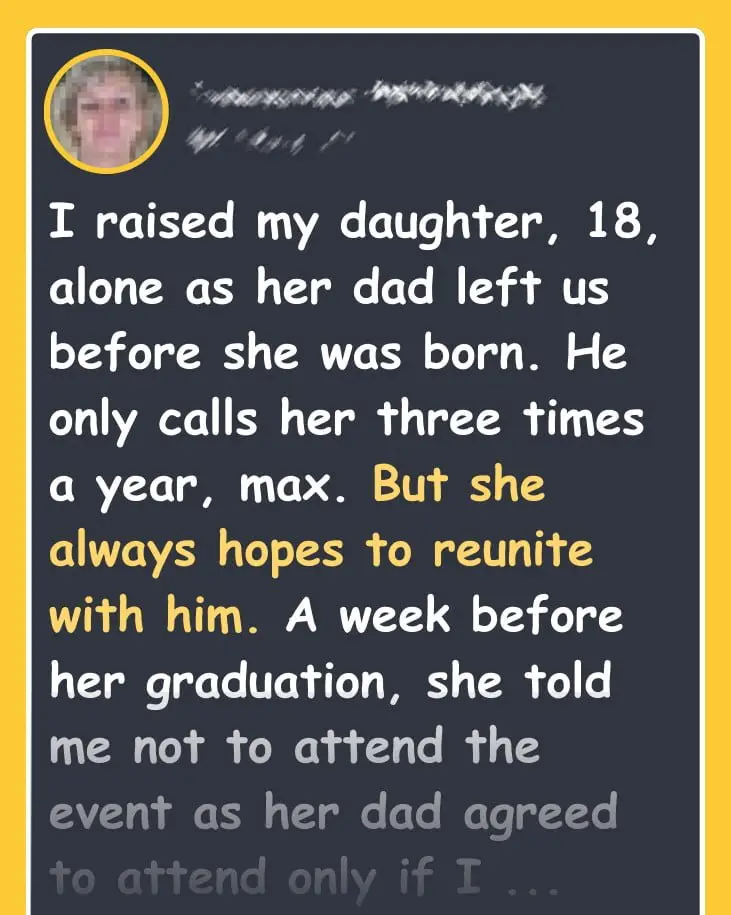
Glancing at the time, she realized the ceremony was about to begin in mere minutes. Perplexed, she asked B why she hadn’t left yet. B, her voice filled with disappointment, revealed that her father had abandoned her once again and was no longer responding.
The woman hugged her daughter tightly, advising her to make the most of her graduation despite the situation. In response, B questioned if her mother wouldn’t be attending now that her father wasn’t, fearing the embarrassment of being the only one without parents present. The woman expressed regret, apologizing once more, and explained that she already had plans.
B, in her anguish, screamed at her mother, labeling her a bad mom. Despite the turmoil, the woman chose not to attend the ceremony, standing firm in her decision to teach her daughter that actions have consequences, even if it shattered her to do so. Since B’s return from the graduation, she remained silent, appearing deeply despondent and as though she had been crying for an eternity.
The woman now found herself wrestling with regret, questioning whether her choice had been too harsh. Her sister supported her decision, but a fellow school mom’s comment about B’s apparent depression at the graduation weighed heavily on her conscience. In this emotional turmoil, the woman sought guidance, questioning whether she was in the wrong for attempting to impart a lesson to her daughter.
Another Unpleasant Conversation
A day after her original post, the woman shared an update on the situation. She revealed that her daughter, B, had been consistently ditching her for her father over the past decade. When she consulted B’s therapist, there was no indication of manipulation; instead, B was holding onto an idealized version of her relationship with her father.
In the conversation with her daughter, the woman apologized for not attending the graduation and expressed her feelings of being left out and unappreciated. B apologized and expressed love, wanting things to return to normal. However, when asked if she regretted uninviting her mother, B insisted it was for the best, as she preferred her father’s presence.
This deeply hurt the woman, who confronted B about her disregard for her feelings. B remained resolute, stating she would always prioritize her father, even if he might not show up. Feeling bitter and angry, the woman acknowledged her limits, knowing she might not be as forgiving in the future if B’s behavior persisted.
Despite potential backlash, the woman expressed her frustration at not being regarded with the same importance as her daughter’s father. She affirmed her commitment to being there for B in the future but questioned her willingness to continue this pattern if it extended to significant life events like future graduations or weddings. She regretted not following the advice she received from the online community, the majority of whom deemed her “NTA.”
The Aftermath
The woman shared a final update in October 2022, where she reflected on her handling of the situation, acknowledging that she had acted immaturely by asking her daughter if she regretted uninviting her.
She clarified that although she was referred to as her daughter’s “best friend,” she maintained a parenting role, including discipline. Following the graduation incident, the woman attempted to contact her daughter’s father (referred to as F) and received a letter in response. F claimed that their daughter had been aggressive and threatening toward him and his family, leading him to distance himself.
He accused B of stalking and threatening his family and insisted he had tried to have a healthy relationship with her. The woman spoke to B about these accusations, leading to a confrontation where B blamed her mother for the breakdown in her relationship with her father. B left for college, cutting off contact and refusing to communicate.
The woman expressed relief despite the pain, as her self-esteem had suffered during the ordeal. She started therapy, experienced a slight improvement, and even went on a date for the first time in a decade without feeling guilty. She acknowledged the imperfections in her relationship with B and recognized the challenging circumstances they both faced.
What do you think about this story?