
My name is Olivia, and for nearly thirty years, I became an expert at vanishing in plain sight—especially within the walls of my own house.
In our family, everything was curated for appearance. My mother, Linda, orchestrated our lives like a flawless catalog spread, while my father, Frank, demanded nothing short of perfection. In their carefully arranged world, perfection had a face: my younger sister, Madison.
Madison was the golden child. Her messes were seen as endearing, her breakdowns forgivable. When I expressed emotions, I was “difficult,” “dramatic,” or “too much.” I’ll never forget my fifteenth birthday.
Madison blew out the candles on a cake with my name spelled wrong. That moment defined how invisible I was. I threw myself into achievement, clinging to the hope that excellence might earn me some affection.
It didn’t. “You’re stronger than Madison,” my father once said, brushing off my need for support. “She’s fragile.
She needs more.” That was their excuse for abandoning me emotionally. I left for college on a full scholarship. They didn’t even wave goodbye.
Years passed. I carved a life for myself as a book editor—giving voice to others because I never learned to speak my truth at home. Two weeks before Madison’s wedding, everything unraveled.
I was idling at a red light when a violent crash tore into my car. Metal crumpled, glass shattered—I lost consciousness before I could scream.
I woke up in a hospital bed, battered and broken.
Both my legs were fractured, my ribs were cracked, and my head was pounding from a concussion.
The driver had fled. For five days, no one from my family showed up. I tried to convince myself they were busy with wedding plans.
Deep down, I knew: I was never their priority. When my parents finally arrived, they looked more prepared for a board meeting than a hospital visit. My mother wore a crisp blazer, and my father’s tie was pristine.
“The doctor says you’ll be discharged in two weeks,” Frank said without preamble. “You’ll be able to attend the wedding.”
My jaw clenched. “I’m in a wheelchair.
I’m in pain every minute. I can’t go.”
“You always have an excuse,” he replied coldly. Linda added, “It’s Madison’s day.
Let’s not make it about you.”
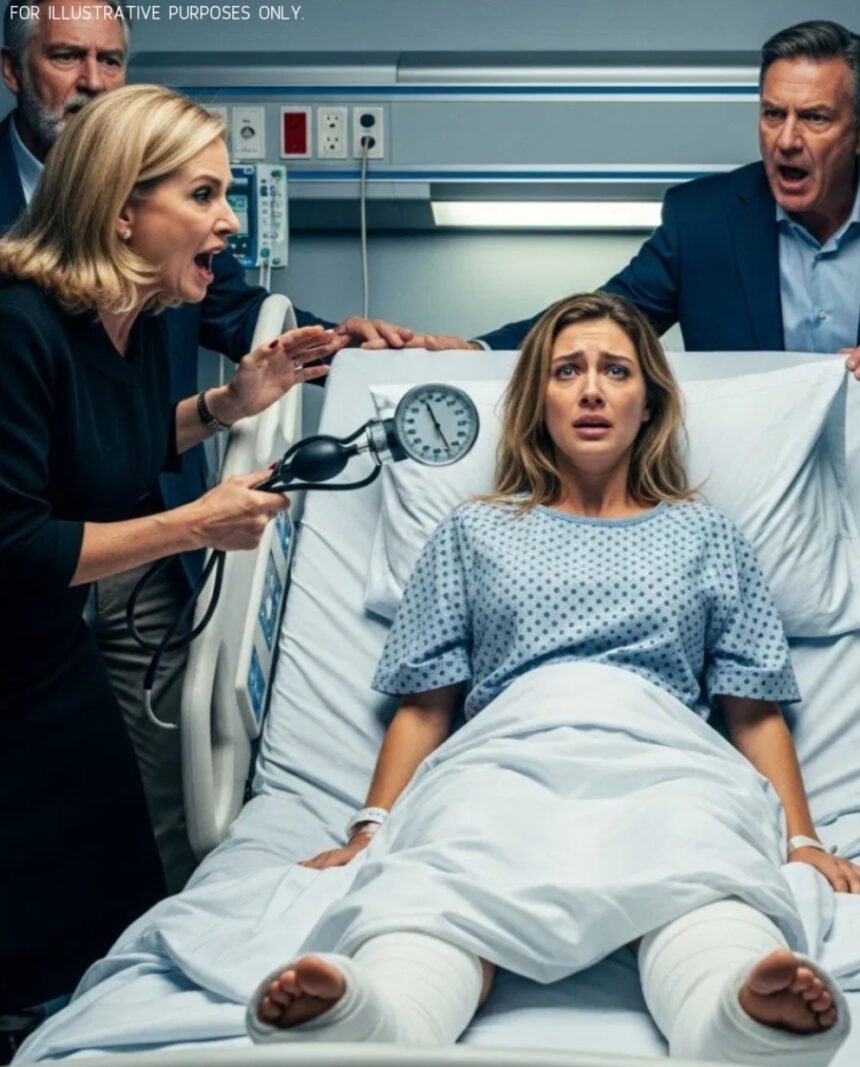
My chest ached—not just from the injuries. “You don’t care I almost died?”
“You’re exaggerating, as usual,” she snapped. “You don’t know how hard this has been for your sister!”
Then something inside her snapped.
In a blur of fury, she grabbed the nearby blood pressure monitor and hurled it at my head.
The story doesn’t end here –
it continues on the next page.
TAP → NEXT PAGE → 👇