
The porch sagged. The rocking chair was gone. I climbed the steps on legs that didn’t feel like mine.
The door hung crooked; the smell hit me—ash and something sharp underneath, copper and sorrow. “Grandpa?” My voice didn’t sound like mine either. Wind answered.
A hand settled on my shoulder and I flinched. “Easy there, son.”
Mrs. Harlow from next door—smaller, hair white now, same kind eyes.
“You didn’t know,” she said, and it wasn’t a question. “Electrical. Three months ago.
Midnight. He almost didn’t make it out.”
The world tilted again. “Is he—?”
“Alive,” she said, quick and firm.
“Hospital’s been trying to reach you. He gave them your number—emergency contact.”
Those unknown calls I’d swiped away while walking into meetings. The voicemails I never listened to.
I pressed my palms to my eyes. “Oh God.”
She didn’t scold. “He kept asking for you,” she said.
“Even when he could barely speak. ‘My grandson coming?’—that’s what he’d ask the nurses.”
She took me through what remained because she knew I needed to see. The kitchen was a charred mouth.
The living room was bones. In the back, under a fallen beam, a small wooden box had somehow survived. I knew it before she picked it up.
“Memory box,” she said. “He made the firefighters fetch it.”
Inside: my mom laughing with her head tipped back, my dad with grease on his cheek, me in a too-big helmet on a too-small bike, Grandpa behind me with steady hands. Between the photos, a neat stack of cards—my cards.
The cheap ones from drugstore aisles, my rushed “Happy birthday, love you” scrawled inside. He’d kept every single one. “He reads them when he misses you,” Mrs.
Harlow whispered. “Which is most days.”
We drove to the hospital. Everything was too bright, too clean.
Room 237. “Arthur?” she said softly from the doorway. “Got a visitor.”
He looked smaller, like someone had let air out of him.
Bandages on his forearms, sun spots like maps, oxygen whispering. Then he saw me and his whole face rearranged into joy so wide I had to hold the doorframe. “Caleb,” he rasped.
“You came.”
He reached for my hand with the one not wrapped in gauze. It was warm and solid and the same as the one that steadied my handlebars. “You’re here,” he said, and that was that.
I stayed. I learned how hospital time stretches. I learned how to help him sit up, how to coax him to eat pudding when he didn’t want to, how to press the button when the pain got big.
In the afternoons, with the blinds making stripes across his blanket, he told me more stories because it’s what he knew to give. He told me the one about the time my father welded his finger to a muffler and pretended he meant to. He told me how my mother could smell rain before it came.
He told me about growing up during the lean years when a sack of flour was treasure. And he told me he’d been writing—spiral notebooks full of names and recipes and dates and the kinds of details people think they’ll remember but don’t. “Houses burn,” he said, eyes on the ceiling tiles.
“Things go. Stories are what outlive us if we let them.”
When he moved into a small apartment near the hospital, I moved my weekends back where they should have been all along. I replaced his porch chair with one that didn’t creak and put it by his window.
I fixed the ancient radio that only gets three stations and learned which one plays the old standards he likes. We planted herbs in a plastic tub on his sill. He hands me the journal when his hand cramps and says, “Write that down,” and I do.
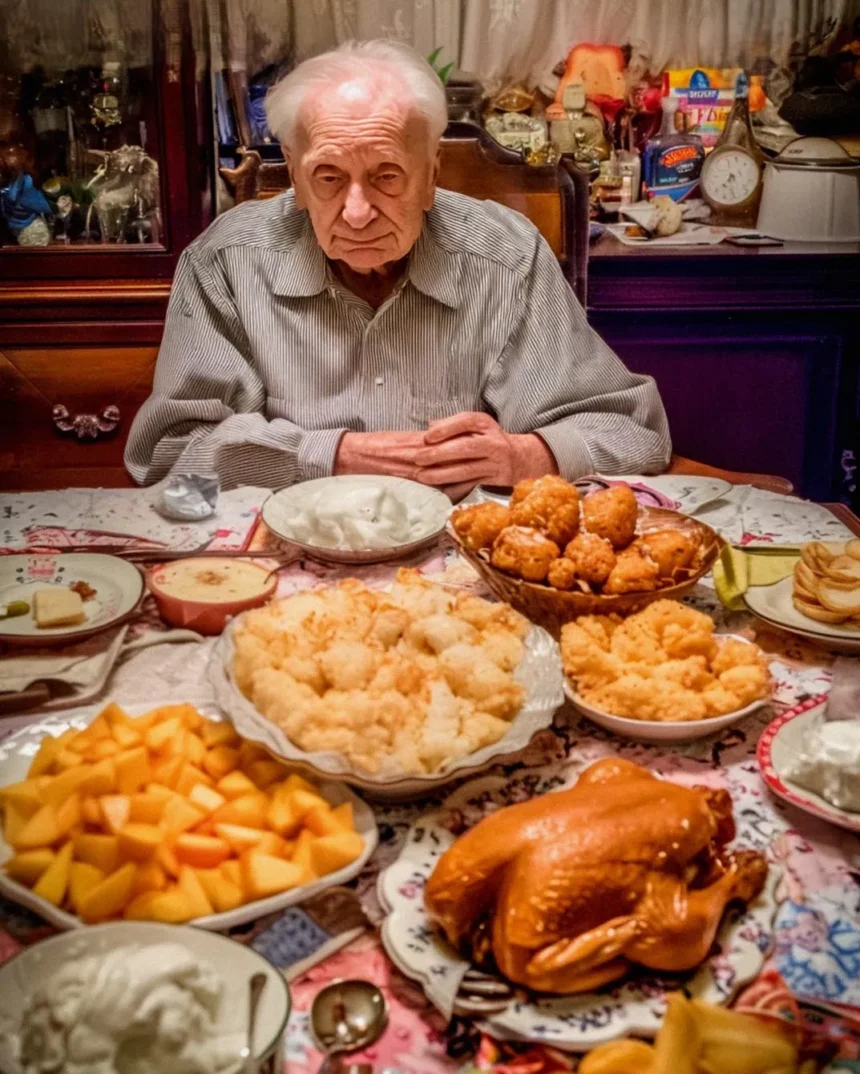
June came around again. I brought pot roast in a battered Dutch oven and he said it was close to mine but needed more thyme. We ate at his little table with the bad fluorescent light humming over us, and when I pulled a cake from a bakery box, he barked a laugh and said, “Don’t you burn my house down with all those candles.” We ate too much and he told me the story of the first birthday after my parents died, when he baked a lopsided cake and we sang off-key and I fell asleep with icing on my face.
I wrote it in his notebook. I still think about the house. I still see those broken ribs of roof when I close my eyes.
But I understand something I didn’t before. People die twice—once when their bodies give out, and again when the stories that hold their shape evaporate because nobody bothered to ask. I almost let that second death happen while I was busy being important.
I almost let the man who raised me go out without hearing me say the simple thing that weighs more than any degree or raise or apartment ever could. So I say it now. In the hospital.
In the new apartment. In the car with the phone held to my ear. “I love you, Grandpa.” He says, “I know,” the way he always has, like gravity, like sunrise.
If your phone buzzes and it’s someone who once held your handlebars, answer it. If you’re “too busy” for pot roast, go anyway. The old chair on the porch won’t wait forever.
Sometimes, if you’re lucky, it waits just long enough for you to come to your senses. I was lucky. And I’m not wasting another June.