

But without it, the tumor will spread quickly.”
On the way home, rain spattered the windshield. Babuji said nothing, then later opened an old box at home: Mother’s wedding jewelry, a set of silver utensils. “Sell them,” he said quietly.
“Saving Priya matters more than these trinkets.”
That night, Savitri called from Mumbai. She promised to return the next evening, bringing whatever little savings she had. I knew then that our family would fight this together.
The following morning, I taped a note to our front door with my new UPI code: “Priya – Urgent brain tumor surgery.
Please help.” My hands shook with shame, but I had no choice. Colleagues in Noida created a fundraising group. Neighbors slipped in coins and small notes.
The poha seller handed me ₹200 wrapped in banana leaf. “Feed the children,” he said simply. Priya saw me troubled and whispered with a faint smile, “Don’t blame yourself.
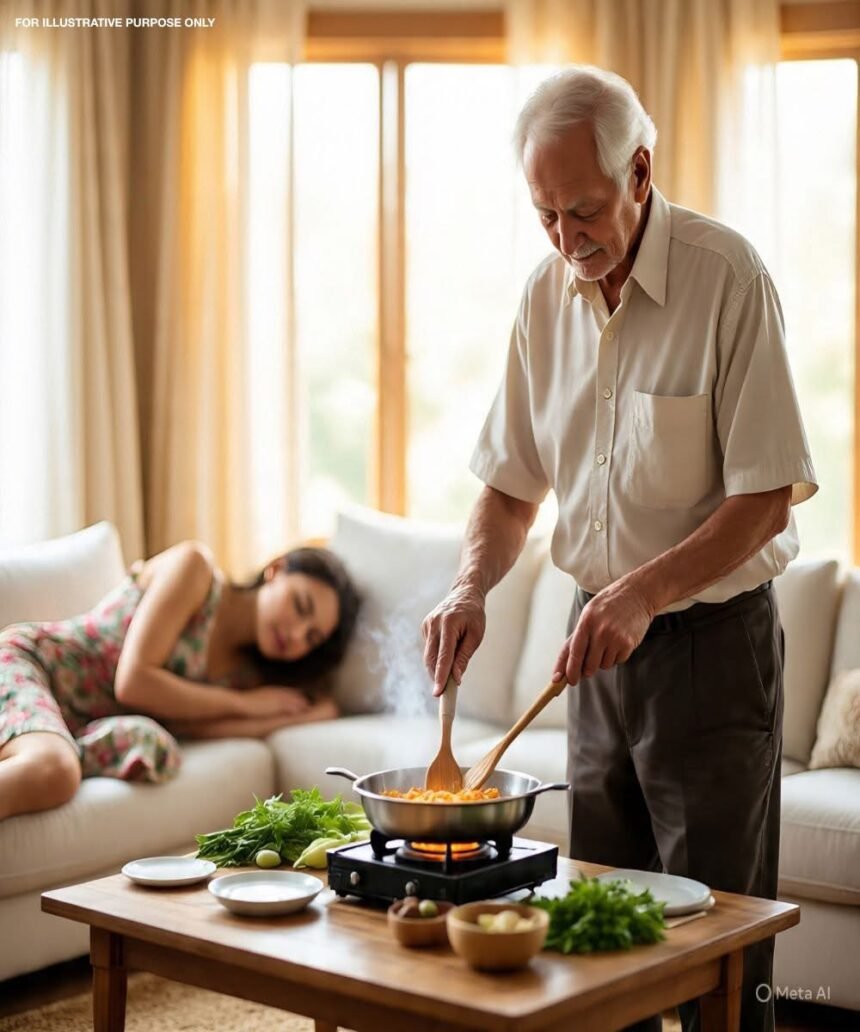
I know you saw me sleeping on the sofa. Thank God you rewound the tape. Otherwise, you’d have judged me unfairly.” Her words pierced me.
She was right and the camera had taught me my first lesson: never jump to conclusions without seeking the truth. On the day of the surgery, Babuji packed eggs and roti at dawn and joined us on the bus. Before entering the operating room, Priya removed her mangalsutra and handed it to her mother.
“Keep it for me,” she said softly. “When I return, put it back on.”
I signed the consent form, my heart pounding at the words “risk of complications… d3ath.” Savitri recited the Hanuman Chalisa as the steel doors closed behind my wife. For seven agonizing hours, we sat in the waiting hall.
Messages from colleagues kept me upright: “We’re working with HR for an emergency loan.” Even the poha seller called to remind me to stay strong.
Finally, the surgeon emerged. “We’ve removed most of the tumor.
Priya is stable, but she’ll need radiotherapy and chemotherapy.” Relief flooded me. Babuji turned his face away, hiding tears.
When I first saw Priya in ICU, her head was swathed in bandages, tubes everywhere. I held her hand and whispered, “I’m here.” Her fingers twitched, eyes fluttered open, and a tear slid down her cheek.
I broke down. Recovery was slow. She struggled to speak, once calling our daughter “Mika” instead of “Misha” and laughing at her own mistake.
The children video-called, showing drawings of “Mommy with a crown”—her bandaged head. Small victories gave us hope. But the bills were relentless.
My salary barely covered expenses. HR approved a loan, neighbors offered coins, and Savitri returned with crumpled notes from her employers. Even Babuji’s silverware was sold.
Every rupee carried someone’s sacrifice. I made sure to share receipts with donors, vowing to honor their trust. Then came another blow: the pathology report revealed a high-grade glioma.
Six weeks of radiation and chemo were required. The doctor cautioned me, “Prepare yourself mentally. This will be hard.”
I nodded.
There was no room for weakness. I requested a temporary transfer to Kanpur, working night shifts from home so I could spend days at the hospital. I wasn’t strong, but I no longer had the right to collapse.
Priya began losing her hair during treatment. One evening, I shaved my own head first, smiling into the mirror. “See, I suit this style better than you.” For the first time since surgery, she laughed aloud.
Life in our home changed. Babuji taught the children to roll rotis. Savitri drilled multiplication tables with songs.
I used the CCTV camera not to judge, but to cherish: Priya practicing steps across the room, Babuji lifting our grandson, my mother tucking the kids in. Every ordinary moment became precious. When colleagues suggested continuing the fundraising group for other patients, I agreed.
We renamed the box at our door: “Priya Fund – For the next family in need.”
Three months later, the doctor compared Priya’s new MRI with the old one. “Stable. No new growth.
We’ll keep monitoring.” Priya squeezed my hand. Babuji coughed with relief, and Savitri whispered a prayer.
On the way home, Priya leaned on my shoulder as the Ganges breeze lifted her scarf. “I miss our kitchen,” she murmured.
A poha seller rushed over, pressing turmeric and jaggery into her hands. “Drink this milk,” he urged. Priya hugged him and wept.
That night, I brewed tea for Babuji and confessed, “I once scolded Priya after seeing her sleep on camera. But rewinding that footage saved me from misjudging her.”
Babuji patted my hand. “Son, everyone gets angry.
What matters is learning to observe carefully before judging. Keep watching with patience.”
I nodded. Can:cer was still a long road, but we had learned how to walk it together – Priya’s courage, Babuji’s quiet strength, Savitri’s resilience, and my own awakening as a husband.
In the corner of our house sat a small plastic box, with my daughter’s crooked handwriting: “Whoever needs, take. Whoever has, give.”
I smiled. That day I had rewound the tape, our lives had found a new direction.