
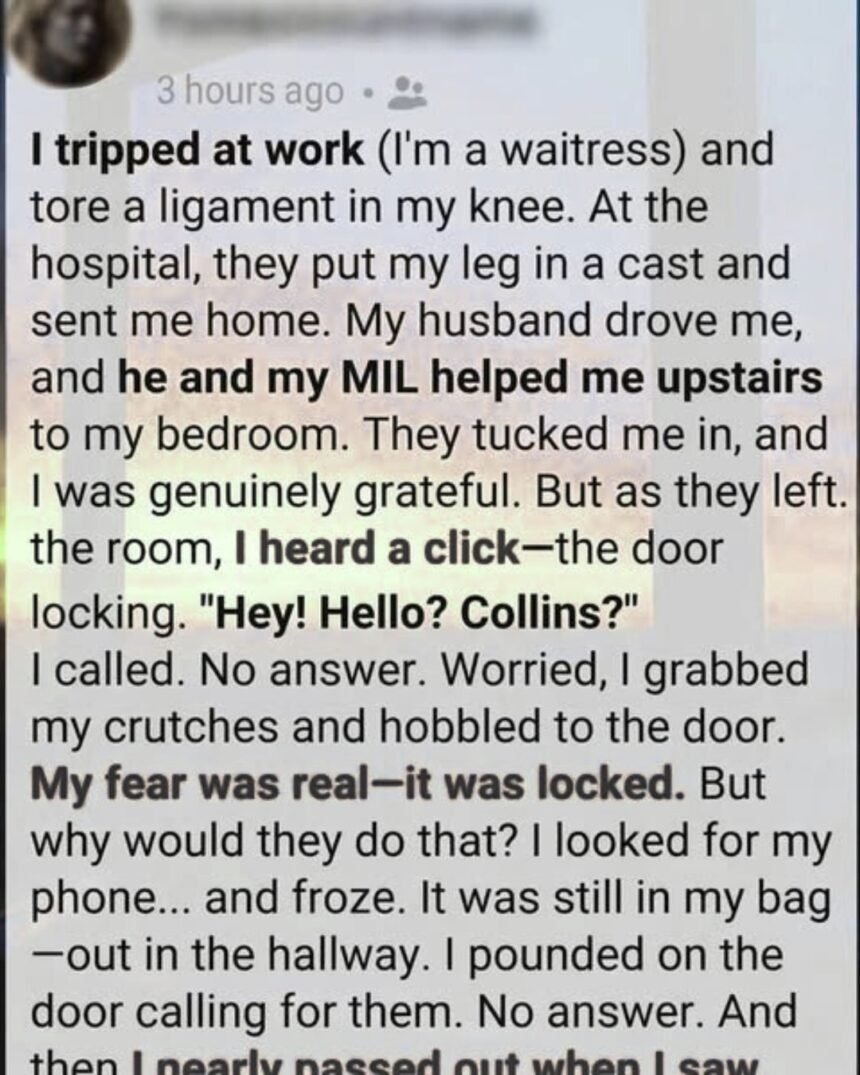
“Rest. Don’t move. We’ll explain soon. Everything is okay.”
My shoulders dropped a little. The words didn’t solve the mystery, but they took the edge off the fear. I wasn’t forgotten. I wasn’t abandoned. Something was going on—I just didn’t know what yet.
A little while later, I heard footsteps in the hallway. This time they sounded normal. Unhurried. Familiar.
The lock clicked again, and the door swung open.
Collins stepped in first, balancing a tray with soup, water, and my phone. Behind him, my mother-in-law carried a bag of ice packs and a worried expression.
Neither of them looked like villains in a bad story. They looked tired. Concerned. Completely unaware of the hurricane that had been swirling in my head.
Before I could say anything, Collins started talking.
“The door stuck again,” he said, running a hand through his hair. “This lock jams once in a while—we should’ve replaced it months ago. As soon as we closed it, it wouldn’t reopen.”
They’d heard a crash downstairs right after they left the room—our old dog had sent a stack of dishes tumbling. In a rush to keep him from getting hurt and clean the mess, they’d gone to deal with it first.
“I wrote the note so you wouldn’t wake up alone and freak out if we were still busy,” he added, nodding at the paper in my hand. “We didn’t realize you were already awake.”
The explanation was… simple.
Annoyingly, beautifully simple.
The panic that had been building inside me slowly melted into something else: relief, mixed with a bit of embarrassment at where my imagination had gone in such a short time.
They helped me sit up, slipped a pillow behind my back, set the tray over my lap, and wrapped fresh ice around my knee. My phone was placed gently in my hand, like a little lifeline being returned.
As I sat there, listening to them chatter about the dog, the dishes, and the stubborn lock, it hit me how vulnerable injury makes you.
When you can’t move freely, when pain clouds your thinking, everything feels bigger, darker, more threatening. A simple stuck door can suddenly feel like a trap. Silence can feel like abandonment. A missing phone can feel like danger instead of inconvenience.
But in that small room—bandaged, sore, and a little shaken—I also realized something else:
Their care was real.
The locked door wasn’t a cage. It was a glitch. An accident in an old frame.
The note on my nightstand, the soup, the ice, the worried faces—those were the truth.
That afternoon became more than just “the day the door got stuck.” It turned into a quiet reminder of how quickly fear can grow in vulnerable moments—and how powerful it is to be surrounded by people you can trust.
Sometimes the door we’re so sure is trapping us… is just stuck for a moment.
And sometimes, the people on the other side aren’t shutting us out at all. They’re just doing their best to show up—with soup, with ice, with a crumpled little note that says:
Everything is okay.