

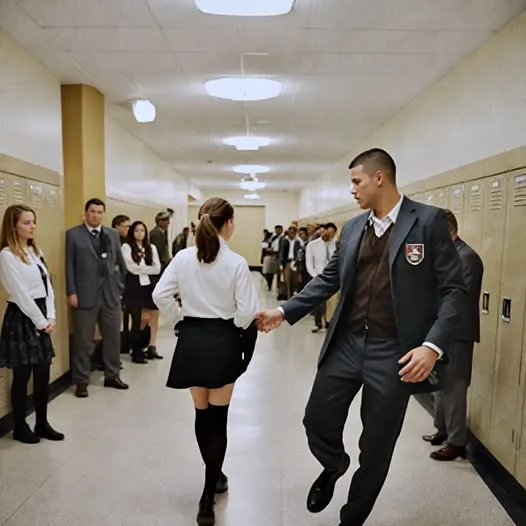
“You can stop being one.”
He nodded, a small movement that felt like a door cracking open. By graduation, Lincoln High had a new rumor about itself: not that it belonged to any one kid, but that a hundred voices could decide what it would be.
Emily stood at the edge of the stage in a dress she’d ironed at dawn.
Her mother squeezed her hand, eyes shining the way they had over too many night shifts and rented apartments. When they called her name for a student leadership award nobody had needed last year, she crossed the stage and turned toward a sea of faces that had once watched her tear-streaked in a bathroom mirror. She spoke without notes.
“I came here planning to be invisible,” she said.
“But silence protects the wrong people. I didn’t change Lincoln.
We did—every person who decided fear doesn’t get the last word.”
She paused, then stepped aside. The auditorium didn’t know whether to gasp or clap, so it did both.
Jessica whooped.
The lunch lady cried. Master Johnson sat in the back—he’d flown in quietly, at Dr. Harris’s insistence—and didn’t wipe his eyes until the house lights came up.
The real victory wasn’t the fight in the parking lot, or the policy in the board minutes, or even the applause that shook dust from the rafters.
It was a movement that taught a school to stand up without tearing down, to lift eyes and voices, to refuse the story where power is a handful of boys at a corner table. Emily arrived as the quiet new girl.
She left as proof that one clear boundary, held steady, can rewrite the rules for everyone. And the best part?
The mats stayed rolled out.
The sign stayed on the door. Next fall, a freshman would read it and walk in.