

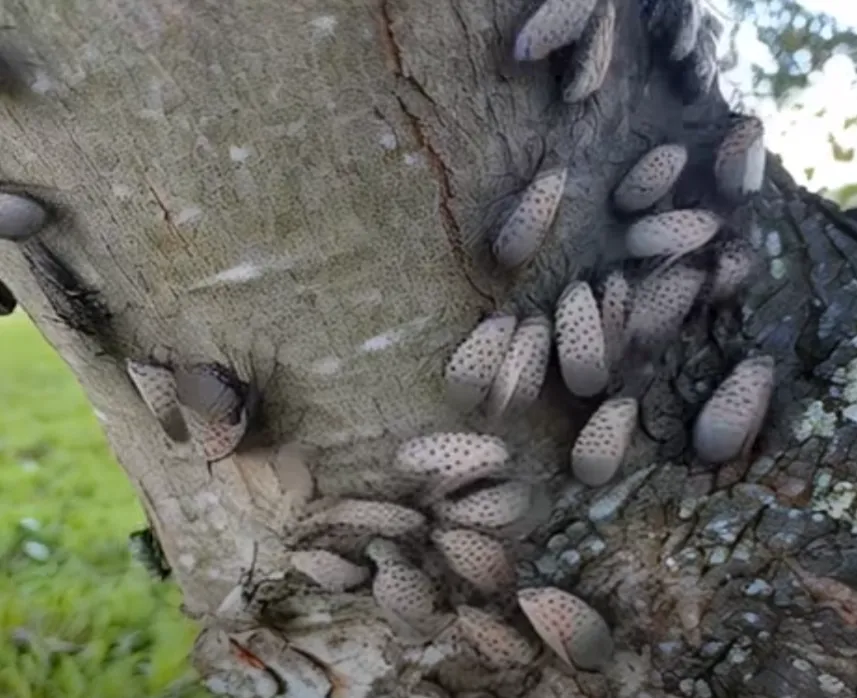
Patios, decks, and car hoods turn slick and grimy; gardens rot under the weight of sticky decay. It’s more than a nuisance — it’s a slow suffocation of the spaces where we live and grow.
Stopping the spread starts with simple, hands-on action.
1. Manual Removal
If you see one, don’t hesitate — stomp or crush it.
Wear gloves if possible, since lanternflies can leave a slight residue. For their egg masses — grayish, mud-like patches about an inch long found on tree trunks, rocks, or outdoor furniture — scrape them into a bag or container filled with hand sanitizer or rubbing alcohol. This ensures the eggs don’t hatch.
2.
Sticky Bands (With Care)
Many homeowners wrap tree trunks with sticky tape to trap nymphs as they crawl upward to feed. It works — but it can also harm birds and squirrels. The solution?
Wrap a protective mesh or cage over the tape so only lanternflies get caught.
3. Insecticidal Options
For larger infestations, insecticidal soaps, neem oil, or EPA-approved chemical sprays can reduce populations. Always read the label, follow safety directions, and use sparingly near water or edible plants.
What saves your trees shouldn’t poison the ecosystem.
4. Inspect and Report
Before traveling or moving outdoor items, check them — lanternfly eggs often cling to vehicles, firewood, and camping gear. If you live in a state where the pest is listed as invasive, report sightings immediately to your local Department of Agriculture or cooperative extension office.
A single report helps track and slow its spread.
The fight against the spotted lanternfly is less about fear and more about responsibility. It’s a reminder that small actions — a stomp, a scrape, a phone call — can add up to a collective defense of our land and livelihoods. These insects may look exotic and harmless, but their beauty masks a destructive appetite.
So yes — it’s time to check your backyard.
Look at tree trunks, railings, and garden pots. What you find might just save the vineyard down the road or the maple in your neighbor’s yard. In a world where problems often feel too big to touch, this one is literally underfoot — and within reach.
If every homeowner, gardener, and weekend hiker stays alert, the spread can slow.
Because the truth is simple: the spotted lanternfly doesn’t belong here — but our vigilance does.