

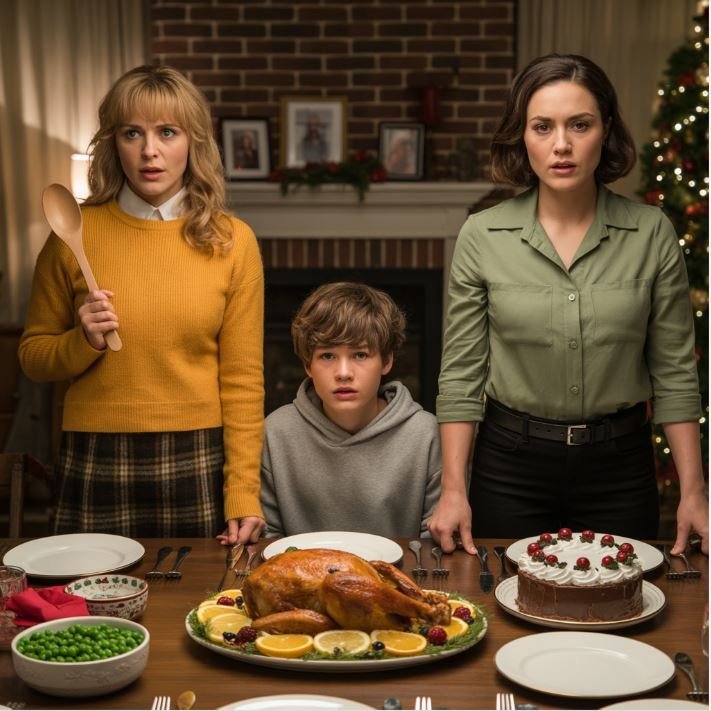
My name is Sarah Mitchell, and at forty-two years old, I thought I’d learned to navigate the complicated landscape of my family dynamics. I’m a divorced mother of two remarkable children—Emma, who just turned seventeen, and Jake, who’s fourteen. We’ve been on our own since their father decided his twenty-five-year-old secretary was more compatible with his midlife crisis than his family was. That was six years ago, and while the betrayal stung, we’ve built something solid from the wreckage: a home filled with laughter, mutual support, and the kind of fierce loyalty that only comes from surviving abandonment together.
My parents, Linda and Robert, are what you might diplomatically call “complicated.” They’ve always operated with an invisible hierarchy, a carefully maintained pecking order that determines whose needs matter most, whose accomplishments deserve celebration, whose feelings warrant consideration. Unfortunately, I’ve never occupied the top tier of that hierarchy. That honor has always belonged to my younger brother Mark, who at thirty-eight has achieved everything my parents value: a successful career as a corporate lawyer, a picture-perfect marriage to Ashley—a woman whose greatest talent seems to be maintaining appearances—and twin sons who serve as living proof of Mark’s genetic superiority.
My parents worship the ground Mark walks on. They treat his twelve-year-old twins like precious artifacts requiring careful preservation, while my children have always been relegated to the status of charming but ultimately negligible additions to the family tree. It’s a dynamic I’ve grown accustomed to over four decades, a background hum of subtle slights and unspoken hierarchies that I’ve learned to navigate through a combination of low expectations and strategic detachment.
But here’s where the story gets interesting, where the carefully maintained facade starts to crack: despite everything, despite years of being treated as secondary, my daughter Emma absolutely adores her grandmother. She calls her “Grammy” with genuine affection, lights up during their phone conversations, and has somehow maintained an optimistic belief in family bonds that I lost decades ago. Emma has always been our family’s peacekeeper, the one who sees the best in people even when they consistently fail to deserve it. It’s a trait I simultaneously admire and worry about, this determination to love people who don’t always love her back with the same intensity.
The story doesn’t end here – it continues on the next page.
TAP → NEXT PAGE → 👇