

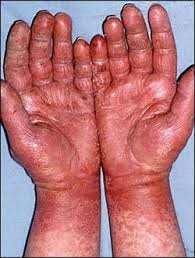
Discover how skin signals can help detect dangerous diseases properly, leading to timely treatment and improved outcomes.
Skin disorders, such as acne and eczema, vary greatly in symptoms and severity. They can be temporary or permanent and may be painless or painful. Some can be life threatening.
There are many different types of skin disorders.
Latex allergy
This condition is considered a medical emergency. Urgent care may be required.
Contact 911 or local emergency services.
This causes a rash, which may occur within minutes to hours after exposure to a latex product. It may be less visible on darker skin or appear lighter or darker than surrounding tissue. It also causes warm, itchy wheals at the site of contact, which may take on a dry, crusted appearance with repeated exposure to latex.
Airborne latex particles may cause cough, runny nose, sneezing, and itchy, watery eyes. A severe allergy to latex can cause swelling and difficulty breathing.
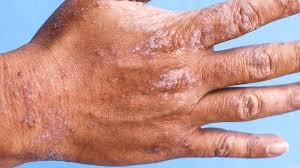
Eczema
Eczema is characterized by pink, red, brown, purple, or gray areas, sometimes with scaly patches that flake off.
Affected areas may be itchy, greasy, or oily. On light skin, eczema can cause a red rash. This rash may appear brown, purple, or gray on darker skin.
Hair loss may also occur in the area with the rash.
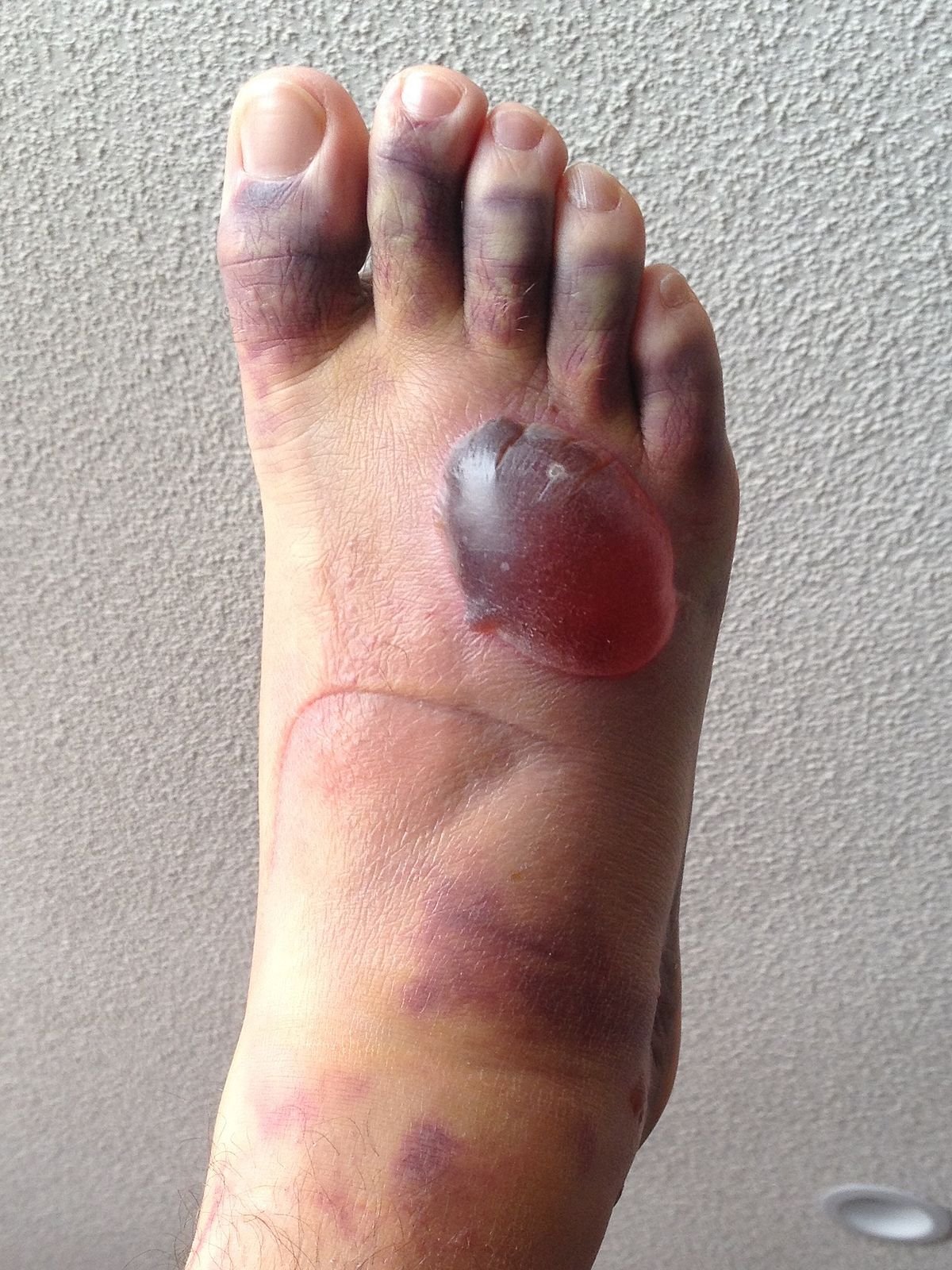
Blister
Blisters are characterized by a watery, clear, fluid-filled area on the skin. They may be smaller than 1 centimeter (vesicle) or larger than 1 cm (bulla) and can occur alone or in groups.
Blisters can be found anywhere on the body.
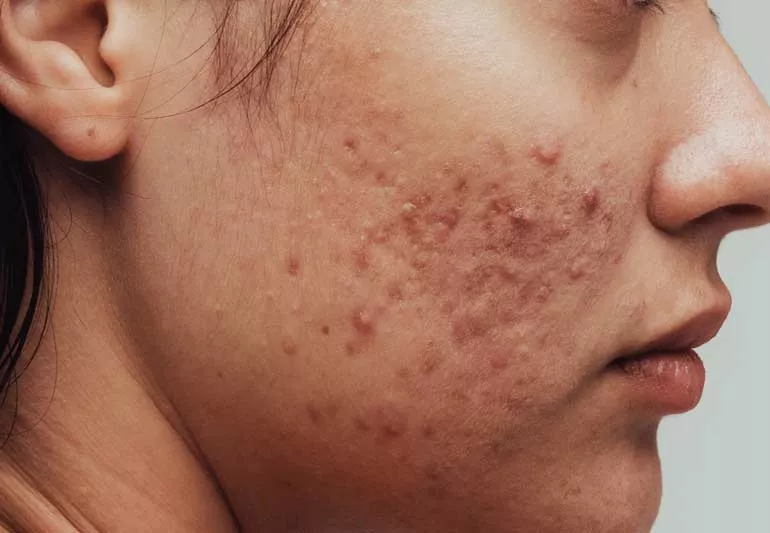
Acne
Acne is commonly located on the face, neck, shoulders, chest, and upper back. Breakouts on the skin are composed of redness, blackheads, whiteheads, pimples, or deep, painful cysts and nodules.
This condition may leave scars or darken the skin if untreated. People of Color can experience dark spots known as post-inflammatory hyperpigmentation (PIH).
Cold sore
This condition causes a red, painful, fluid-filled blister that appears near the mouth and lips.
People with lighter skin may notice more redness than those with darker skin. The affected area will often tingle or burn before the sore is visible. Outbreaks may also be accompanied by mild, flu-like symptoms such as low fever, body aches, and swollen lymph nodes.
Cold sores usually look similar on any skin color but can also cause PIH in people with darker skin.
Psoriasis
This causes scaly, silvery, sharply defined skin plaques. Darker-skinned people might also experience dark brown or purplish patches on the skin.
The story doesn’t end here – it continues on the next page.
TAP → NEXT PAGE → 👇